Chhattisgarh Can Unlock 77.5 GW Renewable Energy from Water Bodies, Mines, and Wastelands: iFOREST Study
Potential Four Times Higher Than Government Estimate; Floating Solar and Mine Land Repurposing Key to Clean Energy Transition
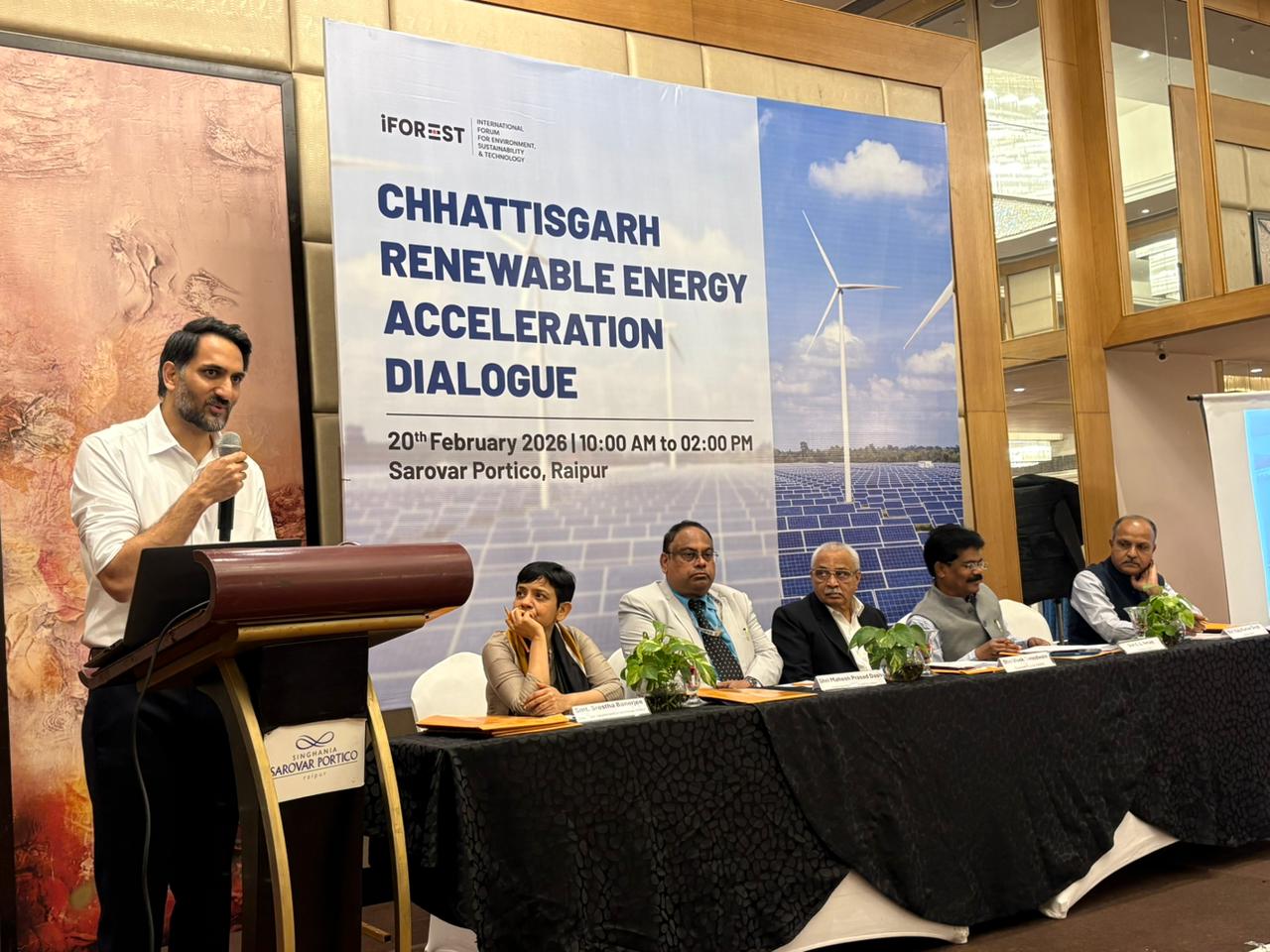
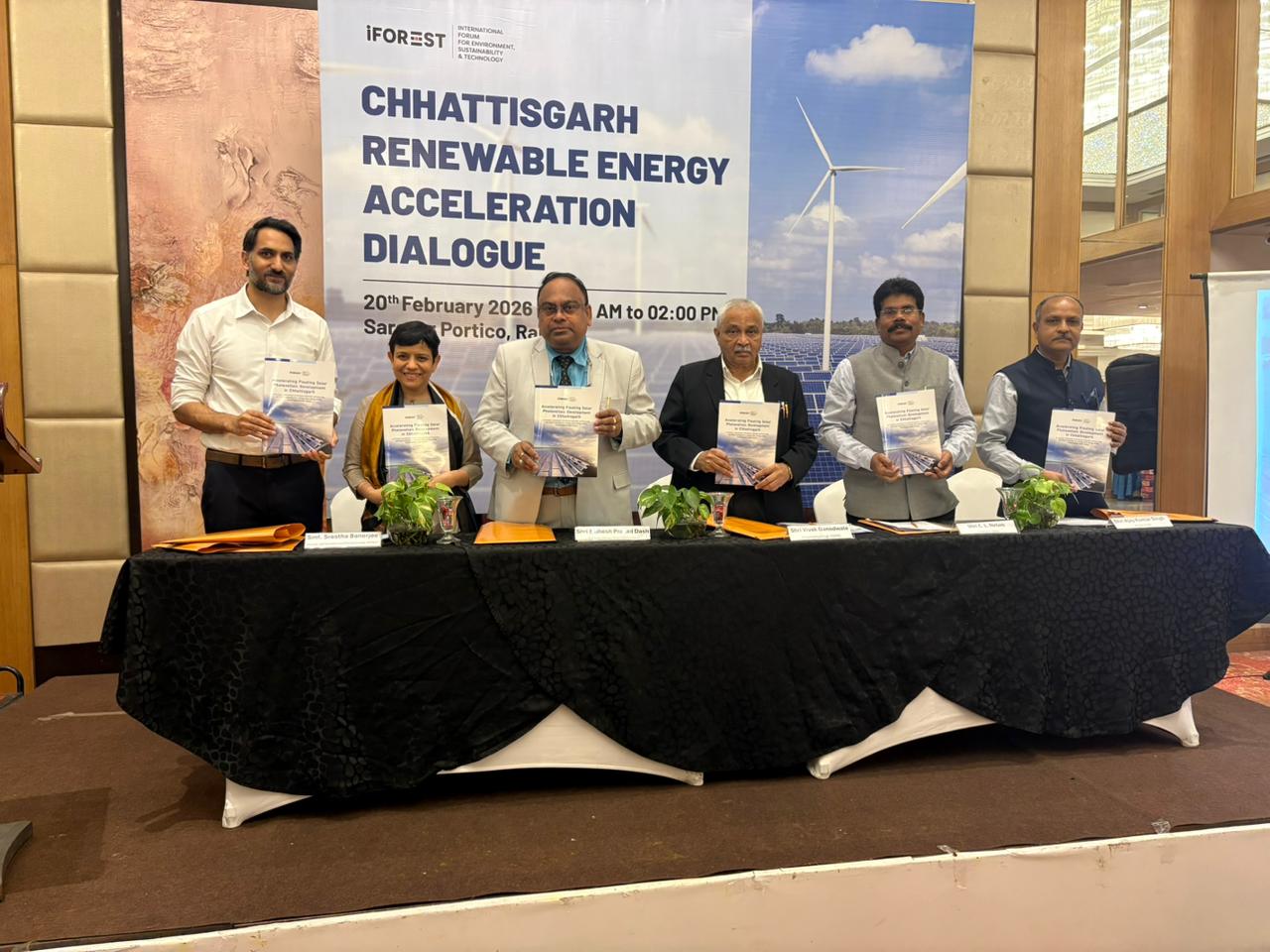
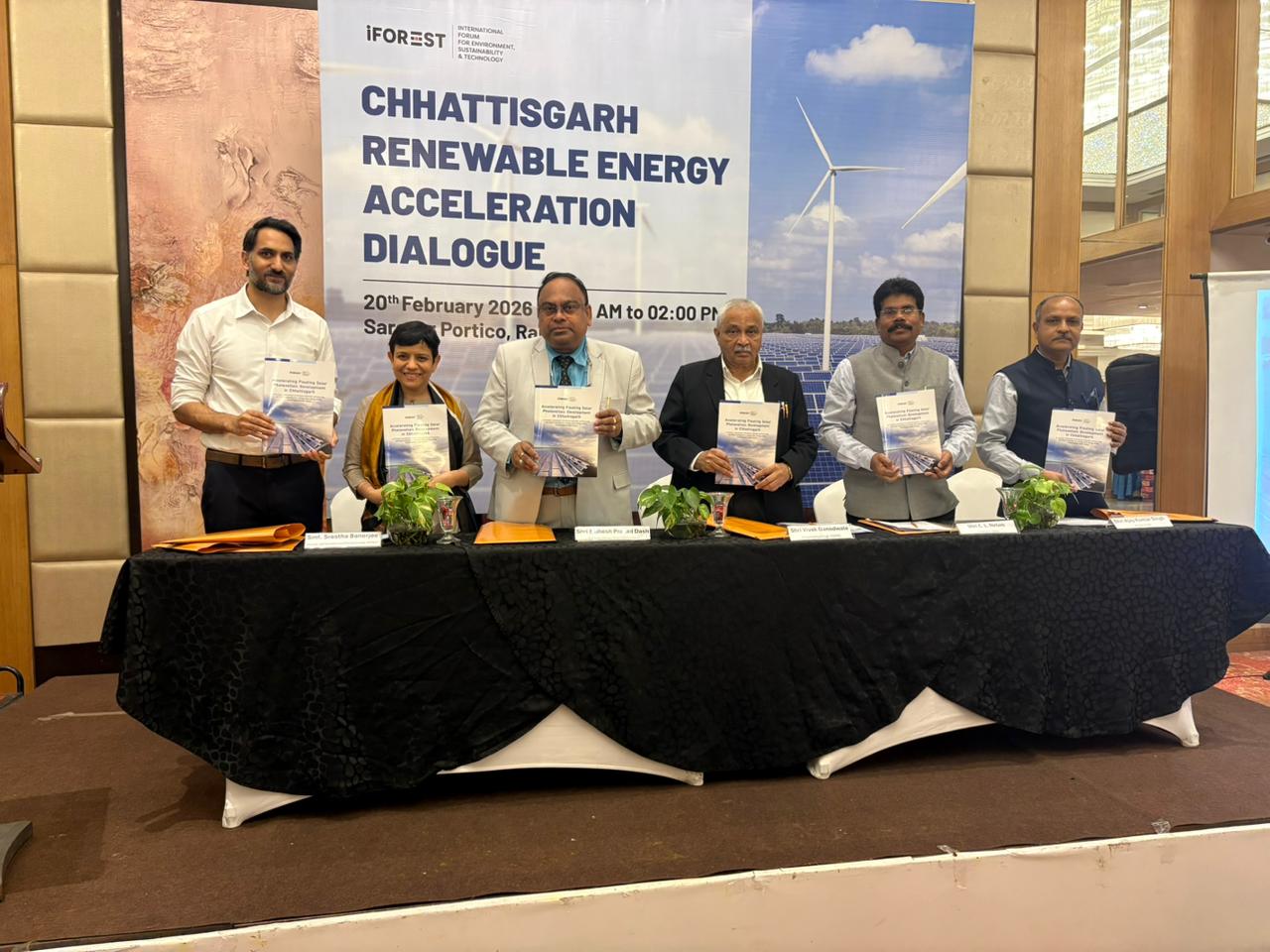
Raipur|Chhattisgarh has the potential to generate 77.5 gigawatts (GW) of renewable energy by utilising its vast water bodies, abandoned mining land, and wastelands,over four times the current estimate by the Ministry of New and Renewable Energy (MNRE). This was revealed in a new assessment released by the International Forum for Environment, Sustainability and Technology (iFOREST) during the Chhattisgarh Renewable Energy Acceleration Dialogue held at Hotel Sarovar Portico Raipur.
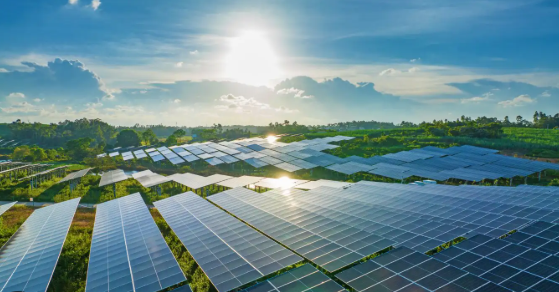
The study highlights that more than half of this potential can be realised by deploying floating solar projects across the state’s extensive network of reservoirs and ponds.
Water Bodies Offer the Largest Opportunity: Chhattisgarh has over 34,000 large and small water bodies, of which about 46% are perennial, maintaining stable water levels throughout the year,ideal for floating solar installations.
According to the assessment:~39 GW can come from floating solar,~41 GW from ground-mounted solar projects.
Floating Solar Photovoltaic (FSPV) systems are considered “land-neutral,” making them particularly suitable for a state where land acquisition is challenging.
Mining Land Repurposing a Major Energy Source as one of India’s largest mining states, Chhattisgarh has significant land available from closed and soon-to-be-closed opencast mines. The report notes that over 9,800 hectares of such land could be repurposed for renewable energy projects over the next decade.
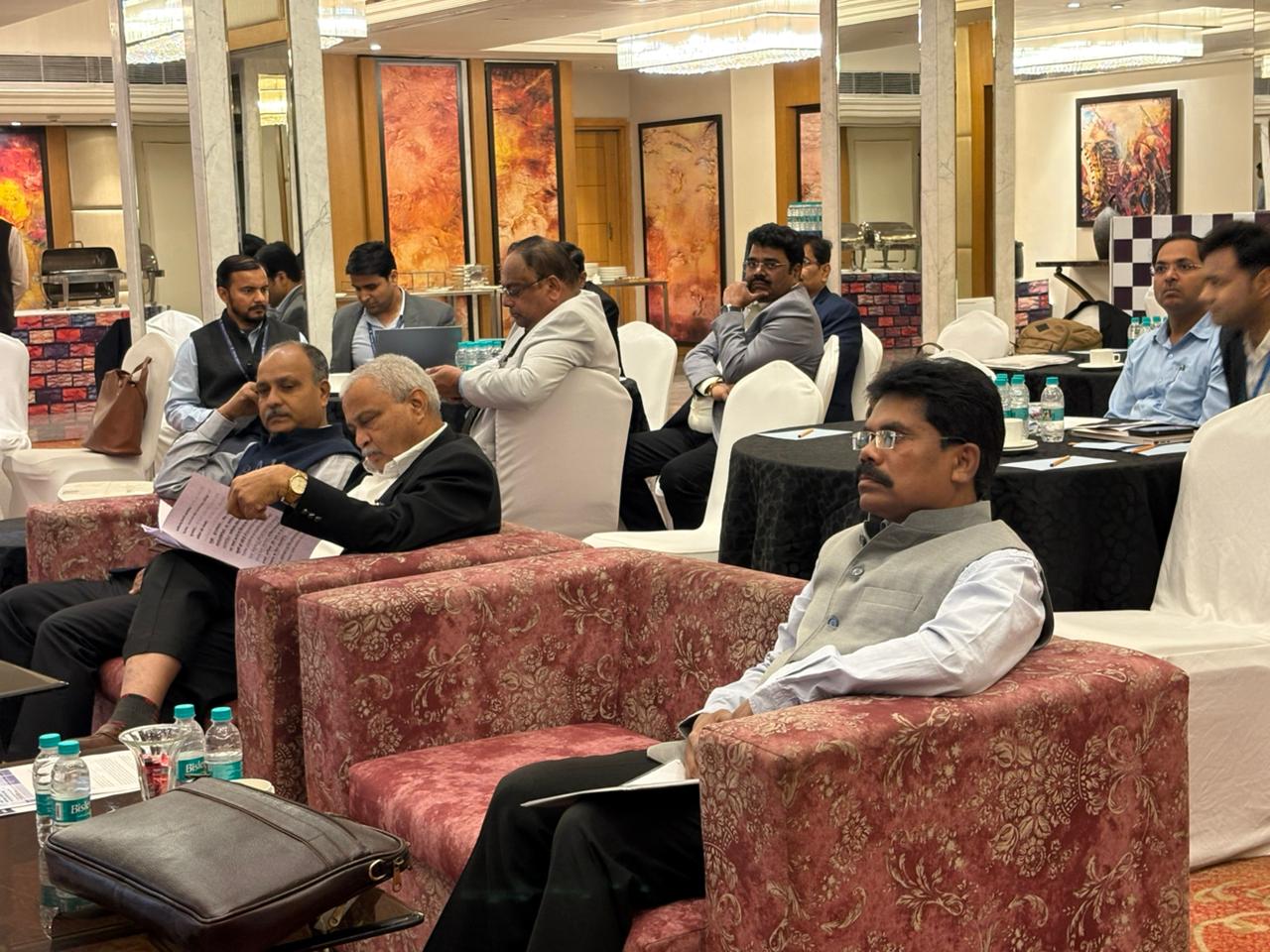
Officials from South Eastern Coalfields Limited (SECL), government agencies, utilities and renewable developers participated in the dialogue.
Land Constraints Call for Innovative Solutions: Opening the discussion, iFOREST Director Dr. Srestha Banerjee emphasized that large parts of the state fall under Fifth Schedule Areas due to a high tribal population, making conventional land acquisition difficult.
He suggested prioritising land-neutral technologies such as floating solar, redevelopment of wastelands and reuse of mining land to ensure responsible and inclusive energy expansion.
Energy Storage Plans for Round-the-Clock Supply: Shri C. L. Netam, Executive Director of Chhattisgarh State Power Generation Company Limited (CSPGCL), stated that the state is working on policies to implement battery storage and pumped storage projects to improve efficiency and ensure reliable 24×7 power supply.
Representatives from the Chhattisgarh Renewable Energy Development Agency (CREDA) were also present. Current Capacity Far Below Potential-
As of December 2025, Chhattisgarh’s installed power capacity stands at 26,288 MW, of which renewable energy accounts for only 2,075 MW (about 8%), indicating significant room for growth.
Policy Support Needed to Attract Investment
The study recommends adopting investor-friendly policies similar to those in Odisha, Jharkhand and Assam to unlock large-scale investments, reduce coal dependence and support industrial decarbonisation.
A dedicated state-level floating solar policy is strongly recommended, including:
A five-year target of 2,000 MW capacity, Environmental and social safeguards,Measures supporting water conservation and local livelihoods,Pathway to Becoming a Clean Energy Leader.
Experts believe that with the right policies and investments, Chhattisgarh could emerge as a major clean energy hub in eastern India while simultaneously enabling environmental restoration, economic diversification, and new opportunities for mining-affected communities.
The Renewable Energy Acceleration Dialogue marks an important step toward aligning policy, planning project pipelines and accelerating the state’s transition to sustainable energy.