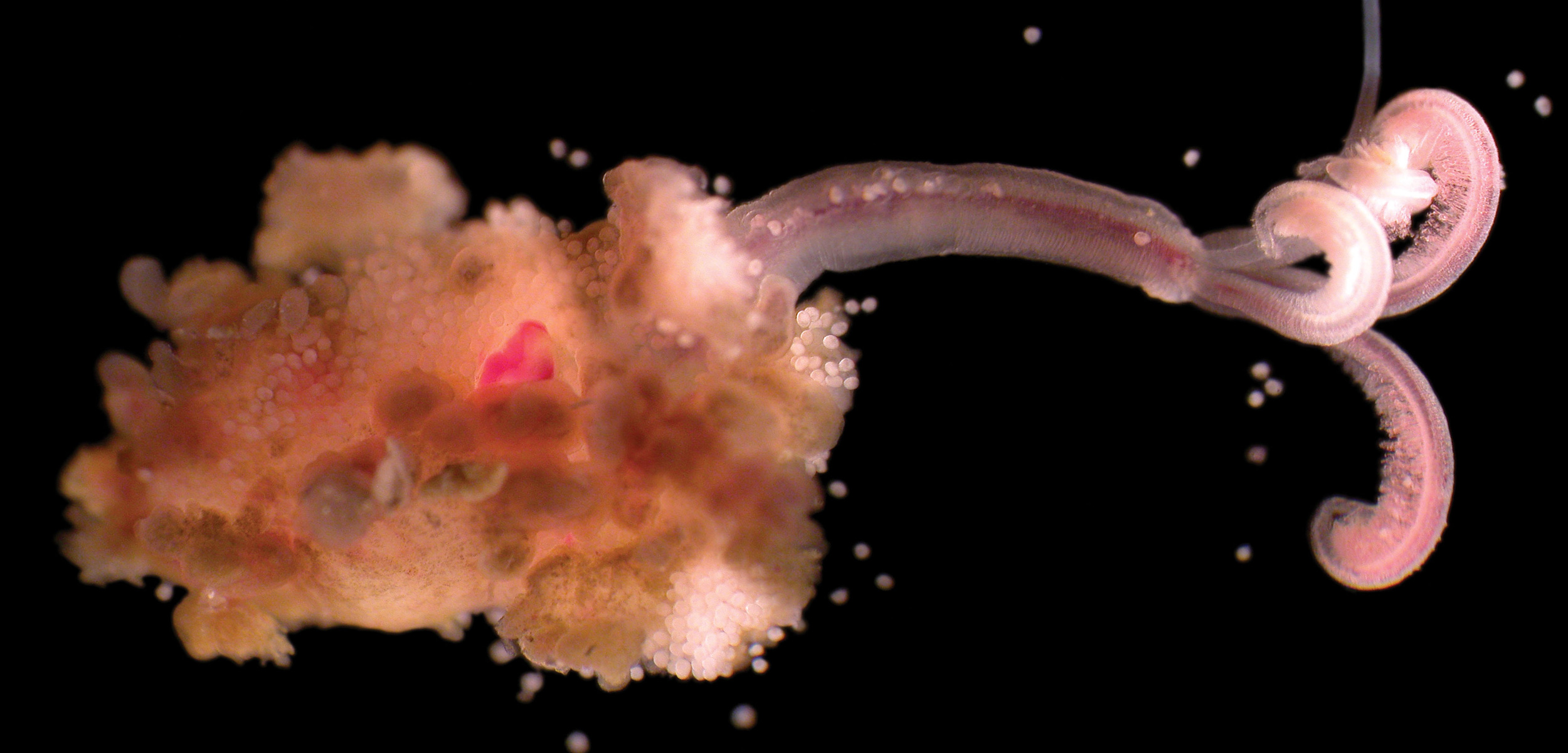
ZOMBIE WORM
These are remarkable organisms that contribute significantly to marine ecosystems & their ability to consume and recycle nutrients from bones highlights the interconnectedness of life and death in the ocean.
Scientific Name:
Osedax
Appearance:
They have a soft, elongated body that can vary in shape. At one end, they typically have a bulbous, sac-like structure for feeding. They also have a variety of appendages, including tentacle-like structures.
Location:
These are primarily found in deep-sea environments, particularly around the remains of marine animals such as whale falls, where they thrive on the bones of dead creatures.
Color:
Their color can vary, but they are often pale or translucent, which helps them blend into their deep-sea environment.
Weight:
The weight of individual zombie worms is not well-documented, as they are small and lightweight & typically measure a few centimeters in length.
Growth:
They can grow to several centimeters in length, with some species reaching up to 10 cm (about 4 inches).
Life:
The lifespan of zombie worms is not precisely known, but they can live for several years.
Nature:
These are marine annelids and are part of the family Osedaxidae. They are known for their unique feeding habits and play a crucial role in the decomposition of organic matter in the ocean.
Food:
These primarily feed on the bones of dead marine animals & secrete enzymes that break down the bone material, allowing them to absorb lipids and other nutrients directly from the bones.
Reproduction & Regeneration:
These reproduce through a process called parthenogenesis, where females can produce offspring without fertilization by males & can also reproduce sexually, depending on the species.
Largest Recorded Specimen:
Recorded to be about 10 cm (approximately 4 inches), although most individuals are smaller.